Theories, Twists, and Fan Reactions
Audience Strategy
AI Influencers Enter Hawkins: Testing Stranger Things Fan Theories
Theories, Twists, and Fan Reactions

What happens when you mix fan theories, influencer-style content, and cutting-edge AI—all inside a custom viewing experience built to test what actually drives excitement for the final season of "Stranger Things?" Watch the video breakdown below.
Study Overview
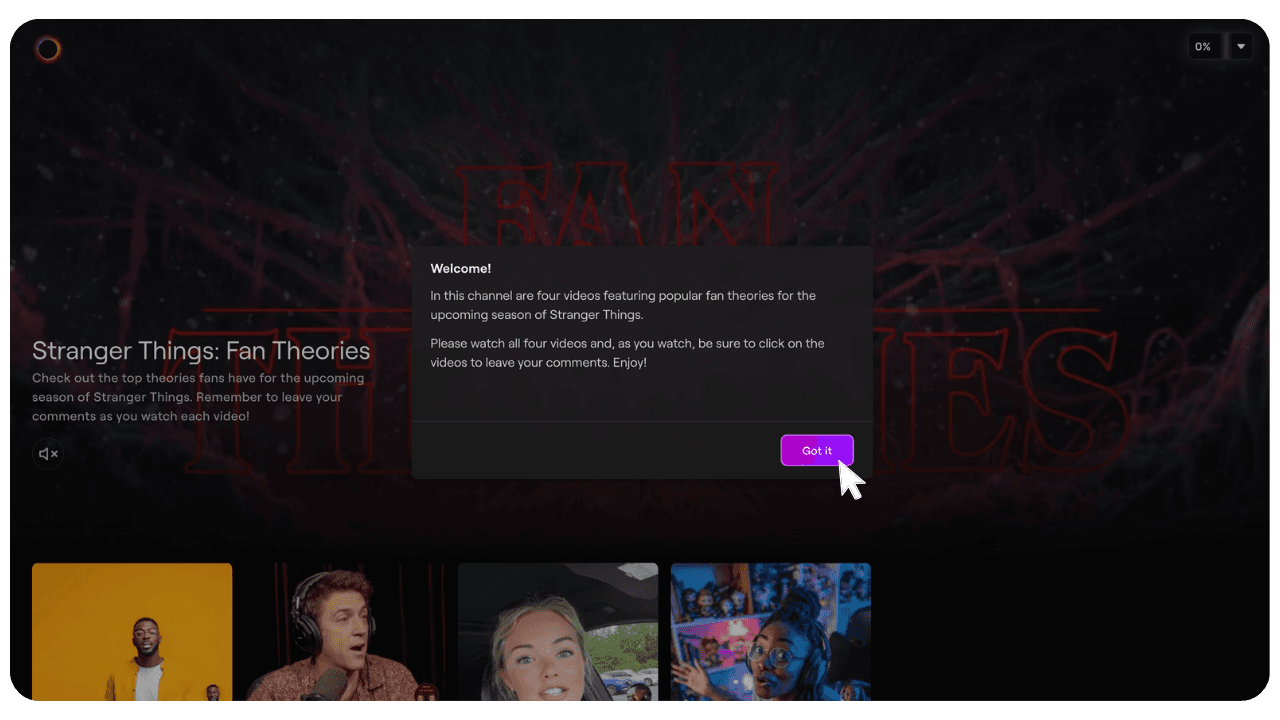
We conducted a single, comprehensive study with 200 Netflix subscribers—die-hard fans, lapsed viewers, and even people who had never seen the show—to explore not just which fan-theory content captures attention, but how audiences respond when the creators delivering those theories aren’t human at all. Every creator in the study was entirely AI-generated. Every face, voice, personality trait, aesthetic choice, and delivery style was synthetic. The question was twofold: Can fan-theory creator content meaningfully boost interest in the new season? And can viewers tell that none of these influencers actually exist? What we learned reveals where audience engagement is headed—and the massive untapped potential of AI-driven entertainment marketing.
Study Overview

We conducted a single, comprehensive study with 200 Netflix subscribers—die-hard fans, lapsed viewers, and even people who had never seen the show—to explore not just which fan-theory content captures attention, but how audiences respond when the creators delivering those theories aren’t human at all. Every creator in the study was entirely AI-generated. Every face, voice, personality trait, aesthetic choice, and delivery style was synthetic. The question was twofold: Can fan-theory creator content meaningfully boost interest in the new season? And can viewers tell that none of these influencers actually exist? What we learned reveals where audience engagement is headed—and the massive untapped potential of AI-driven entertainment marketing.
Study Overview

We conducted a single, comprehensive study with 200 Netflix subscribers—die-hard fans, lapsed viewers, and even people who had never seen the show—to explore not just which fan-theory content captures attention, but how audiences respond when the creators delivering those theories aren’t human at all. Every creator in the study was entirely AI-generated. Every face, voice, personality trait, aesthetic choice, and delivery style was synthetic. The question was twofold: Can fan-theory creator content meaningfully boost interest in the new season? And can viewers tell that none of these influencers actually exist? What we learned reveals where audience engagement is headed—and the massive untapped potential of AI-driven entertainment marketing.
Study Overview

We conducted a single, comprehensive study with 200 Netflix subscribers—die-hard fans, lapsed viewers, and even people who had never seen the show—to explore not just which fan-theory content captures attention, but how audiences respond when the creators delivering those theories aren’t human at all. Every creator in the study was entirely AI-generated. Every face, voice, personality trait, aesthetic choice, and delivery style was synthetic. The question was twofold: Can fan-theory creator content meaningfully boost interest in the new season? And can viewers tell that none of these influencers actually exist? What we learned reveals where audience engagement is headed—and the massive untapped potential of AI-driven entertainment marketing.
Study Overview

We conducted a single, comprehensive study with 200 Netflix subscribers—die-hard fans, lapsed viewers, and even people who had never seen the show—to explore not just which fan-theory content captures attention, but how audiences respond when the creators delivering those theories aren’t human at all. Every creator in the study was entirely AI-generated. Every face, voice, personality trait, aesthetic choice, and delivery style was synthetic. The question was twofold: Can fan-theory creator content meaningfully boost interest in the new season? And can viewers tell that none of these influencers actually exist? What we learned reveals where audience engagement is headed—and the massive untapped potential of AI-driven entertainment marketing.
Meet the AI Creators
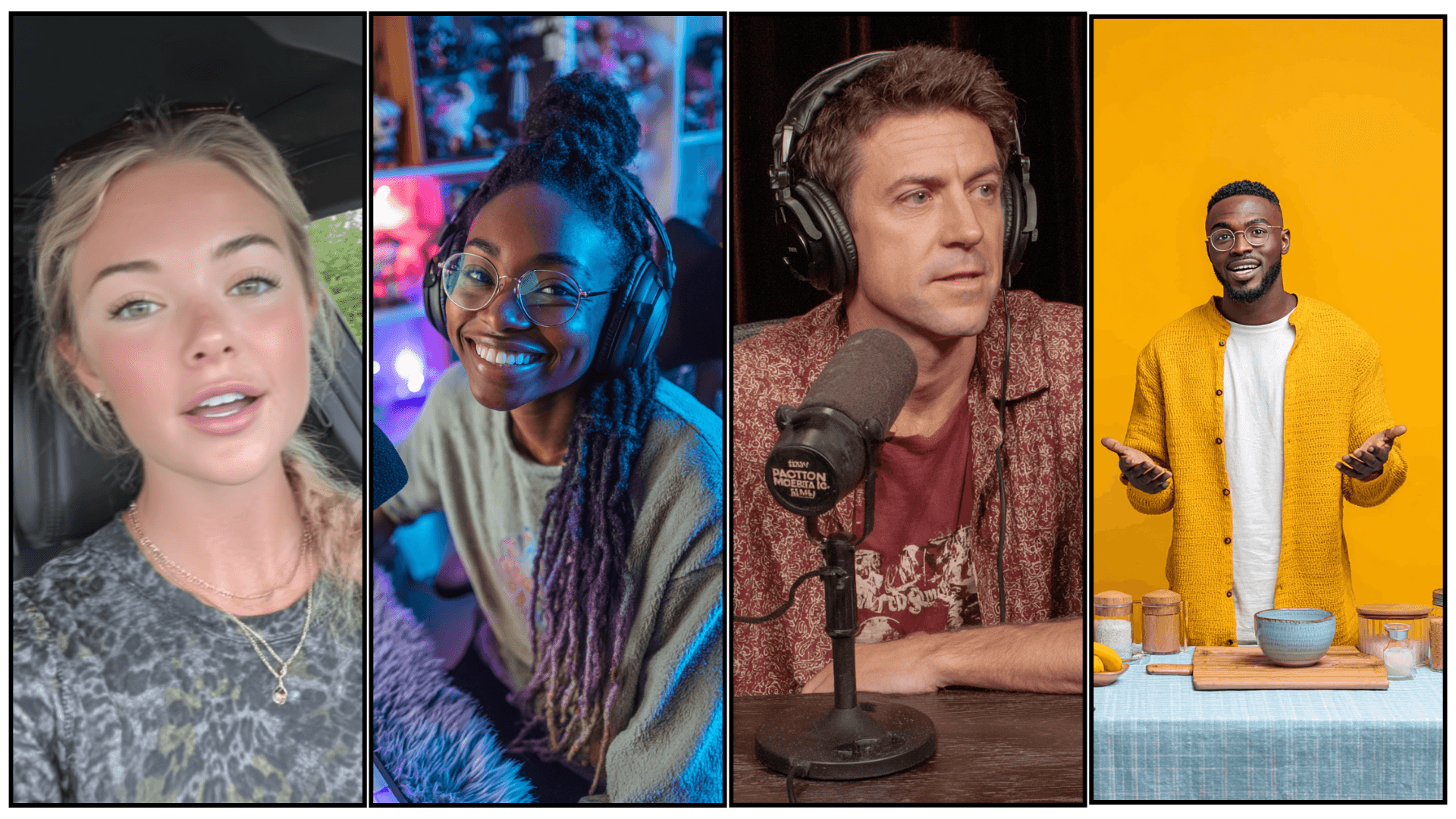
@bros_on_shows
Trope: podcast bros
Theory: The entire Stranger Things story is just an imagined Dungeons & Dragons campaign.
Two over-confident hosts dive into lore and “connect the dots,” arguing the entire plot is one long D&D fever dream.
@bros_on_shows
Trope: podcast bros
Theory: The entire Stranger Things story is just an imagined Dungeons & Dragons campaign.
Two over-confident hosts dive into lore and “connect the dots,” arguing the entire plot is one long D&D fever dream.
@mellowyellowty
Trope: excited content creator
Theory: One or more major characters will perish in the final season.
High energy, expressive, and emotionally invested, Ty brings dramatic flair—and predicts heartbreak.
@sierra_streams
Trope: gamer/streamer
Theory: Mrs. Wheeler is actually Vecna’s sister, Alice Creel.
Streaming from her RGB-lit setup, Sierra breaks down clues and lore to argue that Karen Wheeler has ties to the Upside Down no one saw coming.
@car_theory_girl
Trope: lifestyle creator
Theory: Max, while in a coma, will fight Vecna from inside his mind.
Bright, polished, and emotionally grounded, she offers a theory viewers found compelling and surprisingly believable
Fan Theories Impact Interest
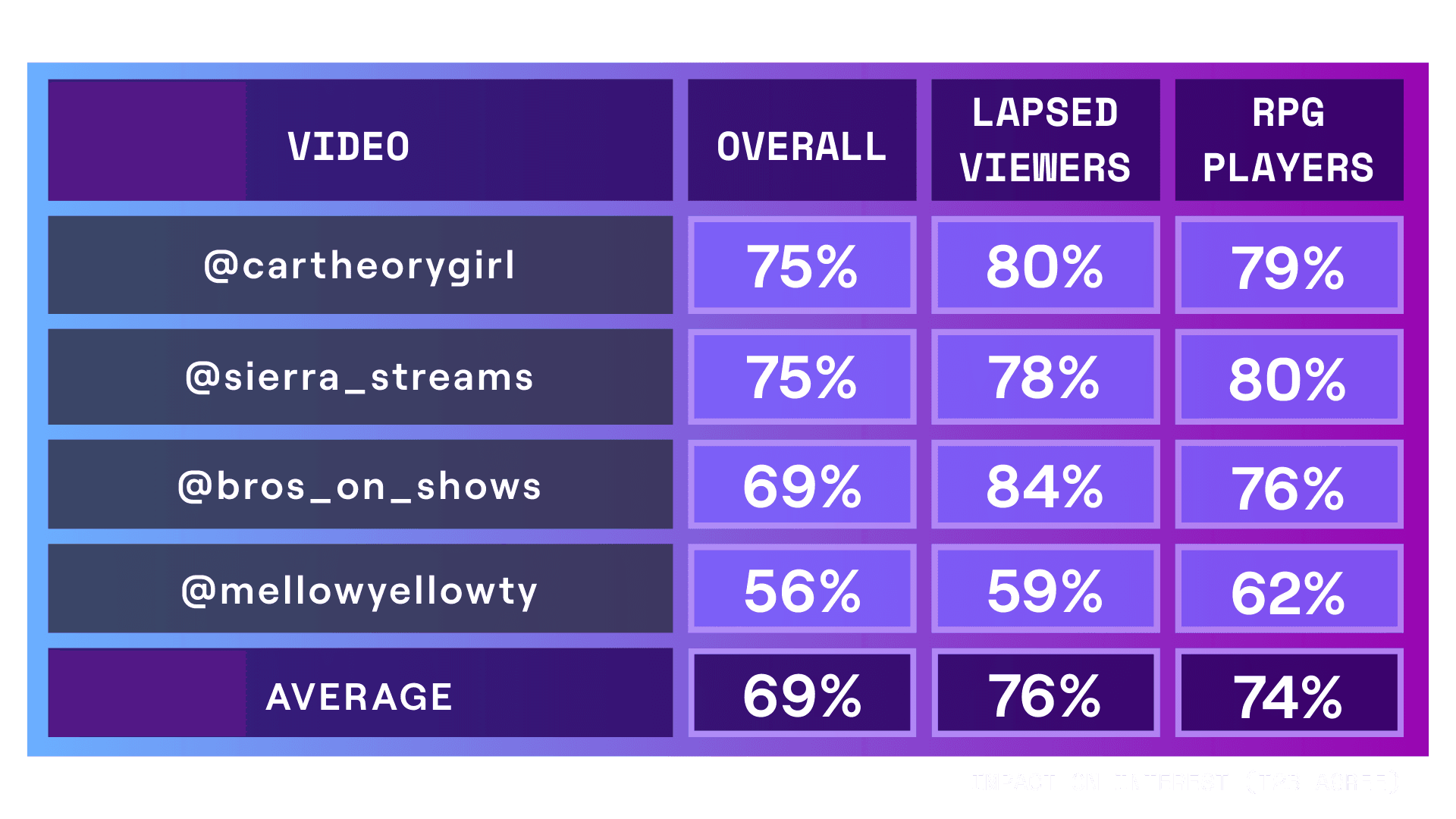
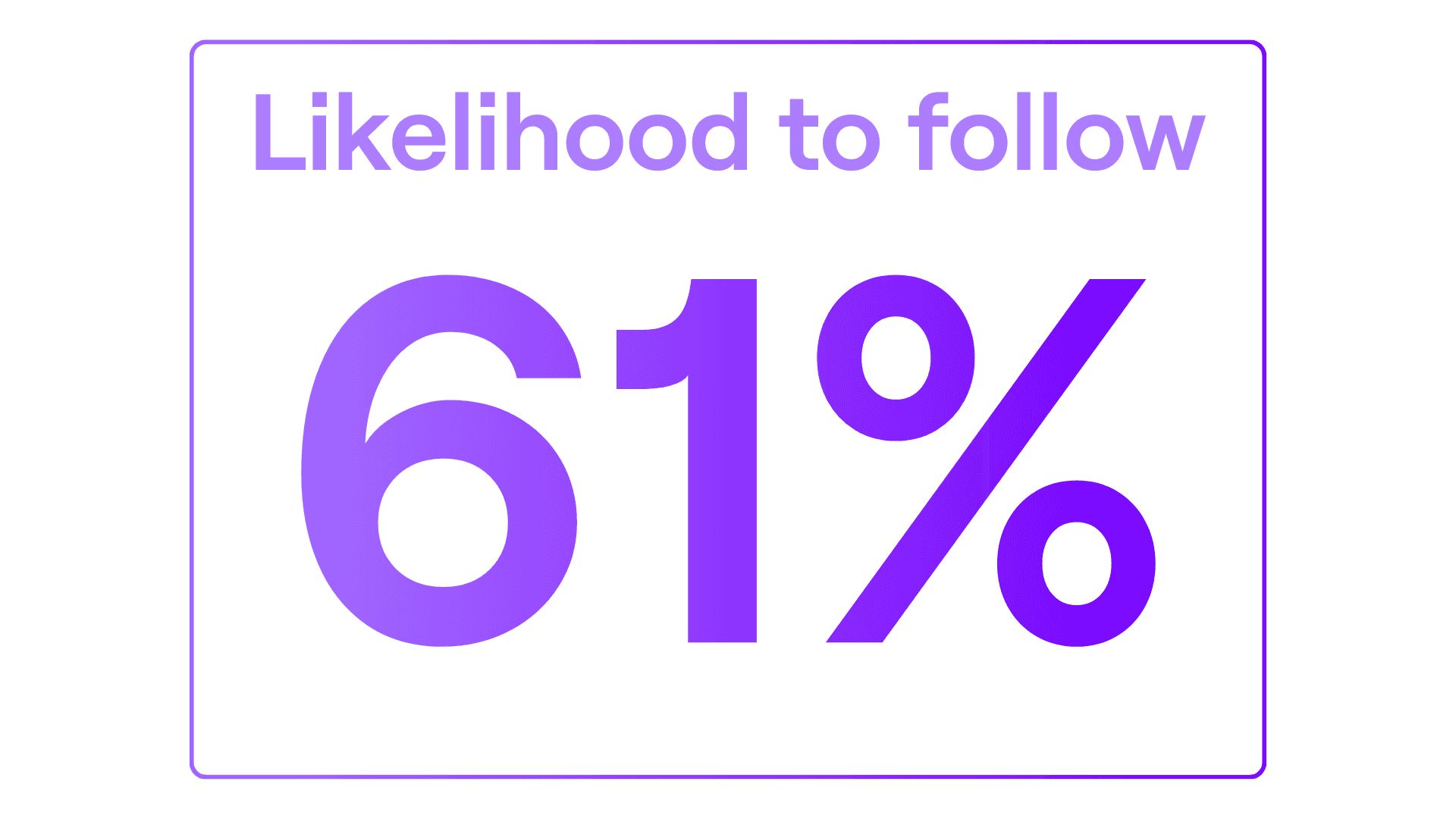
After watching the videos, interest in the upcoming season rose significantly across different audience segments and fandoms. These are striking lifts for content built entirely on speculation, personality, and aesthetic cues. Viewers didn’t just like the theories—they engaged with the creators themselves: 61% said they’d be likely to follow at least one of the influencers, with @car_theory_girl (68%) and @sierra_streams (66%) being top picks. Even though none of these influencers were real, viewers formed real impressions of them.
Fan Theories Impact Interest
After watching the videos, interest in the upcoming season rose significantly across different audience segments and fandoms. These are striking lifts for content built entirely on speculation, personality, and aesthetic cues. Viewers didn’t just like the theories—they engaged with the creators themselves: 61% said they’d be likely to follow at least one of the influencers, with @car_theory_girl (68%) and @sierra_streams (66%) being top picks. Even though none of these influencers were real, viewers formed real impressions of them.

Fan Theories Impact Interest
After watching the videos, interest in the upcoming season rose significantly across different audience segments and fandoms. These are striking lifts for content built entirely on speculation, personality, and aesthetic cues. Viewers didn’t just like the theories—they engaged with the creators themselves: 61% said they’d be likely to follow at least one of the influencers, with @car_theory_girl (68%) and @sierra_streams (66%) being top picks. Even though none of these influencers were real, viewers formed real impressions of them.

Fan Theories Impact Interest
After watching the videos, interest in the upcoming season rose significantly across different audience segments and fandoms. These are striking lifts for content built entirely on speculation, personality, and aesthetic cues. Viewers didn’t just like the theories—they engaged with the creators themselves: 61% said they’d be likely to follow at least one of the influencers, with @car_theory_girl (68%) and @sierra_streams (66%) being top picks. Even though none of these influencers were real, viewers formed real impressions of them.

Fan Theories Impact Interest
After watching the videos, interest in the upcoming season rose significantly across different audience segments and fandoms. These are striking lifts for content built entirely on speculation, personality, and aesthetic cues. Viewers didn’t just like the theories—they engaged with the creators themselves: 61% said they’d be likely to follow at least one of the influencers, with @car_theory_girl (68%) and @sierra_streams (66%) being top picks. Even though none of these influencers were real, viewers formed real impressions of them.

AI Fidelity Test
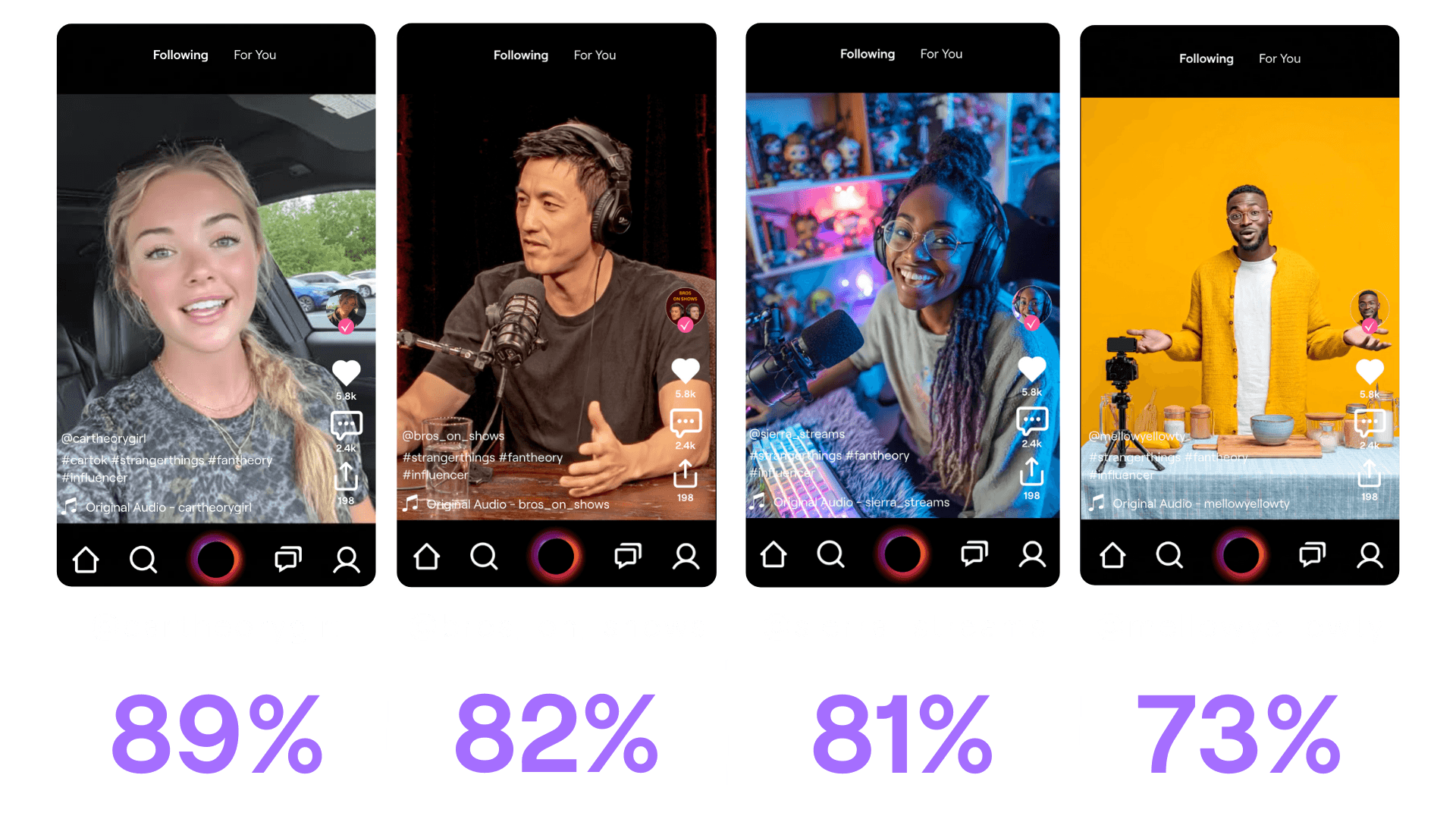
Almost no one realized the creators were synthetic. Across all four influencers: A large majority of viewers were not able to detect AI influence, with @cartheorygirl leading the other influencers with 89% of viewers saying she was not AI. In other words, AI-generated influencer content—when crafted with the right cues—can be as believable and as effective as traditional creator marketing. And importantly: The AI nature of the content didn’t diminish excitement at all. The interest-lift numbers mirrored what we’d expect from genuine creator-driven fan content.
AI Fidelity Test

Almost no one realized the creators were synthetic. Across all four influencers: A large majority of viewers were not able to detect AI influence, with @cartheorygirl leading the other influencers with 89% of viewers saying she was not AI. In other words, AI-generated influencer content—when crafted with the right cues—can be as believable and as effective as traditional creator marketing. And importantly: The AI nature of the content didn’t diminish excitement at all. The interest-lift numbers mirrored what we’d expect from genuine creator-driven fan content.
AI Fidelity Test

Almost no one realized the creators were synthetic. Across all four influencers: A large majority of viewers were not able to detect AI influence, with @cartheorygirl leading the other influencers with 89% of viewers saying she was not AI. In other words, AI-generated influencer content—when crafted with the right cues—can be as believable and as effective as traditional creator marketing. And importantly: The AI nature of the content didn’t diminish excitement at all. The interest-lift numbers mirrored what we’d expect from genuine creator-driven fan content.
AI Fidelity Test

Almost no one realized the creators were synthetic. Across all four influencers: A large majority of viewers were not able to detect AI influence, with @cartheorygirl leading the other influencers with 89% of viewers saying she was not AI. In other words, AI-generated influencer content—when crafted with the right cues—can be as believable and as effective as traditional creator marketing. And importantly: The AI nature of the content didn’t diminish excitement at all. The interest-lift numbers mirrored what we’d expect from genuine creator-driven fan content.
AI Fidelity Test

Almost no one realized the creators were synthetic. Across all four influencers: A large majority of viewers were not able to detect AI influence, with @cartheorygirl leading the other influencers with 89% of viewers saying she was not AI. In other words, AI-generated influencer content—when crafted with the right cues—can be as believable and as effective as traditional creator marketing. And importantly: The AI nature of the content didn’t diminish excitement at all. The interest-lift numbers mirrored what we’d expect from genuine creator-driven fan content.
What this means for entertainment marketing
This study makes one thing clear: fan-theory content isn’t just fun—it’s incredibly effective at building momentum around a major release. Even people who had stopped watching—or never started—found themselves newly intrigued after engaging with creator-style videos. For entertainment marketers, this opens up an entirely new creative toolkit. AI personas can scale content, stay on-brand, and adapt to any storyline or tone. The opportunity is huge, but it comes with responsibility. As these tools become more convincing, transparency and trust will need to be actively managed to ensure audiences feel respected rather than misled. AI creators aren’t replacing real influencers—but they’re already proving they can stand alongside them as powerful partners in building anticipation, shaping conversations, and driving fan engagement.
What this means for entertainment marketing
This study makes one thing clear: fan-theory content isn’t just fun—it’s incredibly effective at building momentum around a major release. Even people who had stopped watching—or never started—found themselves newly intrigued after engaging with creator-style videos. For entertainment marketers, this opens up an entirely new creative toolkit. AI personas can scale content, stay on-brand, and adapt to any storyline or tone. The opportunity is huge, but it comes with responsibility. As these tools become more convincing, transparency and trust will need to be actively managed to ensure audiences feel respected rather than misled. AI creators aren’t replacing real influencers—but they’re already proving they can stand alongside them as powerful partners in building anticipation, shaping conversations, and driving fan engagement.


What this means for entertainment marketing
This study makes one thing clear: fan-theory content isn’t just fun—it’s incredibly effective at building momentum around a major release. Even people who had stopped watching—or never started—found themselves newly intrigued after engaging with creator-style videos. For entertainment marketers, this opens up an entirely new creative toolkit. AI personas can scale content, stay on-brand, and adapt to any storyline or tone. The opportunity is huge, but it comes with responsibility. As these tools become more convincing, transparency and trust will need to be actively managed to ensure audiences feel respected rather than misled. AI creators aren’t replacing real influencers—but they’re already proving they can stand alongside them as powerful partners in building anticipation, shaping conversations, and driving fan engagement.


What this means for entertainment marketing
This study makes one thing clear: fan-theory content isn’t just fun—it’s incredibly effective at building momentum around a major release. Even people who had stopped watching—or never started—found themselves newly intrigued after engaging with creator-style videos. For entertainment marketers, this opens up an entirely new creative toolkit. AI personas can scale content, stay on-brand, and adapt to any storyline or tone. The opportunity is huge, but it comes with responsibility. As these tools become more convincing, transparency and trust will need to be actively managed to ensure audiences feel respected rather than misled. AI creators aren’t replacing real influencers—but they’re already proving they can stand alongside them as powerful partners in building anticipation, shaping conversations, and driving fan engagement.


What this means for entertainment marketing
This study makes one thing clear: fan-theory content isn’t just fun—it’s incredibly effective at building momentum around a major release. Even people who had stopped watching—or never started—found themselves newly intrigued after engaging with creator-style videos. For entertainment marketers, this opens up an entirely new creative toolkit. AI personas can scale content, stay on-brand, and adapt to any storyline or tone. The opportunity is huge, but it comes with responsibility. As these tools become more convincing, transparency and trust will need to be actively managed to ensure audiences feel respected rather than misled. AI creators aren’t replacing real influencers—but they’re already proving they can stand alongside them as powerful partners in building anticipation, shaping conversations, and driving fan engagement.


MORE CASE STUDIES
transformers-one

Sci Fi
What Audiences Think About the New Look
28-years-later-content-study

Sci Fi
Horror Fans React to the Official Trailer in Lumiere
viral-moo-deng-brand-lift-study

Brand Lift Study
Moo Deng's Viral Success: What It Means for Brand Strategy
how-to-end-a-rom-com-right
Rom-Coms
How to End a Rom-Com Right

MORE CASE STUDIES
transformers-one

Sci Fi
What Audiences Think About the New Look
28-years-later-content-study

Sci Fi
Horror Fans React to the Official Trailer in Lumiere
viral-moo-deng-brand-lift-study

Brand Lift Study
Moo Deng's Viral Success: What It Means for Brand Strategy
how-to-end-a-rom-com-right

Rom-Coms
How to End a Rom-Com Right
MORE CASE STUDIES
transformers-one

Sci Fi
What Audiences Think About the New Look
28-years-later-content-study

Sci Fi
Horror Fans React to the Official Trailer in Lumiere
viral-moo-deng-brand-lift-study

Brand Lift Study
Moo Deng's Viral Success: What It Means for Brand Strategy
how-to-end-a-rom-com-right

Rom-Coms
How to End a Rom-Com Right
MORE CASE STUDIES
transformers-one

Sci Fi
What Audiences Think About the New Look
28-years-later-content-study

Sci Fi
Horror Fans React to the Official Trailer in Lumiere
viral-moo-deng-brand-lift-study

Brand Lift Study
Moo Deng's Viral Success: What It Means for Brand Strategy
how-to-end-a-rom-com-right

Rom-Coms
How to End a Rom-Com Right
MORE CASE STUDIES
transformers-one

Sci Fi
What Audiences Think About the New Look
28-years-later-content-study

Sci Fi
Horror Fans React to the Official Trailer in Lumiere
viral-moo-deng-brand-lift-study

Brand Lift Study
Moo Deng's Viral Success: What It Means for Brand Strategy
how-to-end-a-rom-com-right

Rom-Coms
How to End a Rom-Com Right

Want to know even more about what audiences found compelling in these clips? Or what they might find particularly engaging in your content? Reach out to us!

Want to know even more about what audiences found compelling in these clips? Or what they might find particularly engaging in your content? Reach out to us!

Want to know even more about what audiences found compelling in these clips? Or what they might find particularly engaging in your content? Reach out to us!

Want to know even more about what audiences found compelling in these clips? Or what they might find particularly engaging in your content? Reach out to us!

Want to know even more about what audiences found compelling in these clips? Or what they might find particularly engaging in your content? Reach out to us!
