A Case Study on the Launch Video
Advertising, Branding & Sponsorships
Launching into a Brave New World, with Apple Vision Pro
A Case Study on the Launch Video
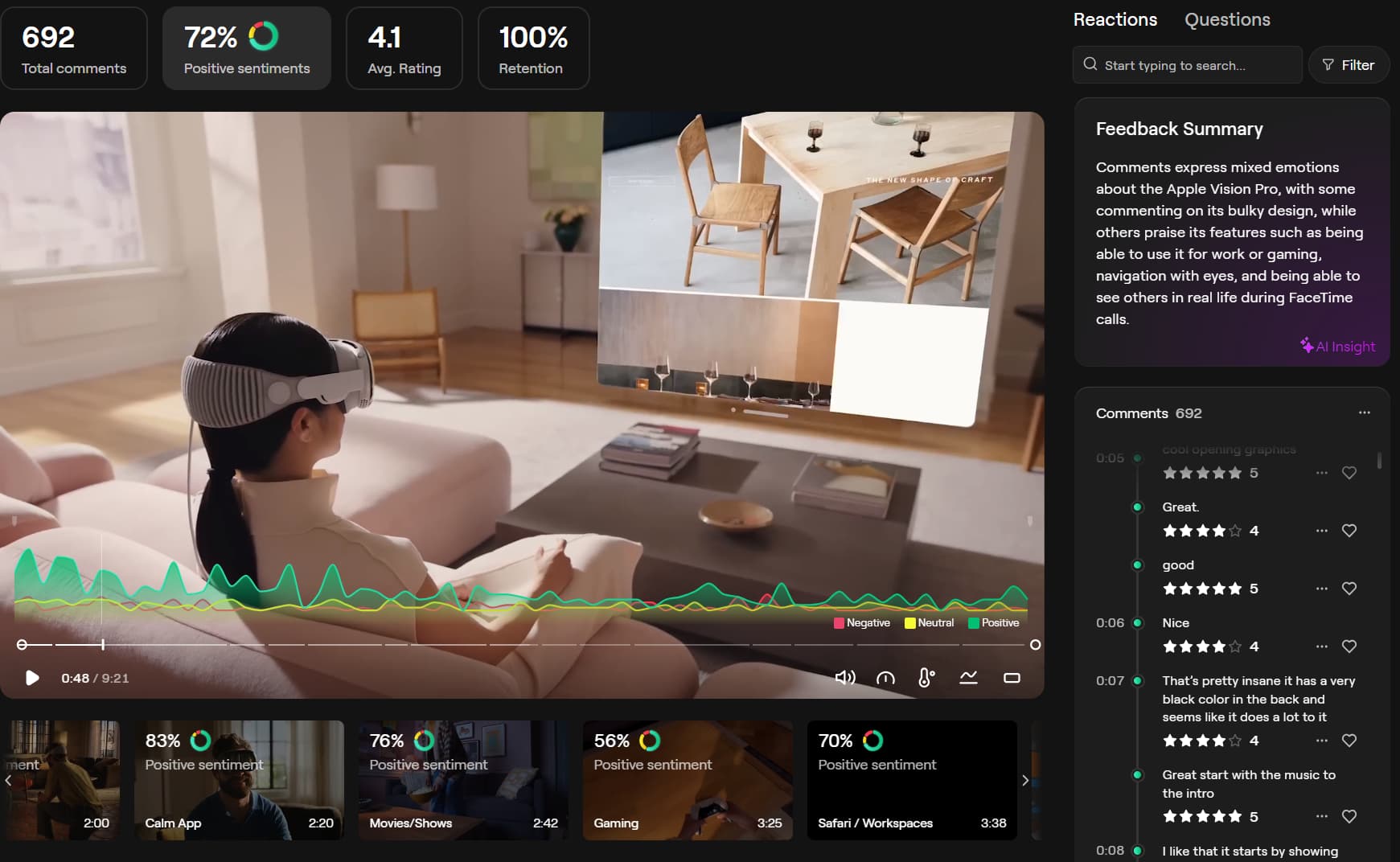
When Apple launches a new product, the world takes notice. The Vision Pro is the most ambitious product that the company has announced in years, and producing a launch video that strikes the right balance of informing, explaining, exciting, and building demand is critically important to success. Our study examined the effectiveness of this video in terms of building general interest, demonstrating specific features, and managing the extremely high expectations around this game-changing new product.
The team at Latitude executed a research study to investigate perceptions of the Apple Vision Pro concept as a whole, as well as the individual capabilities highlighted in the video. A sample of 200 people was asked to watch the launch video in Lumiere, react to the presentation of this new product, and answer a series of questions on their perceptions and likelihood of use. Oh and speaking of game-changing technology, this case study used Lumiere’s new Conversations feature to dive deep into each viewer's ideas, providing relevant context and clarification to the survey data captured.
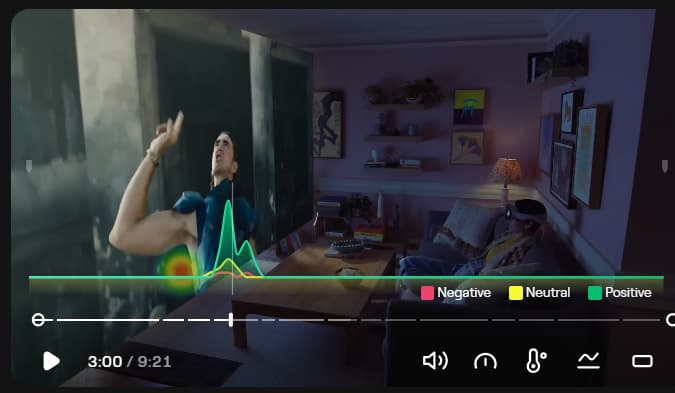
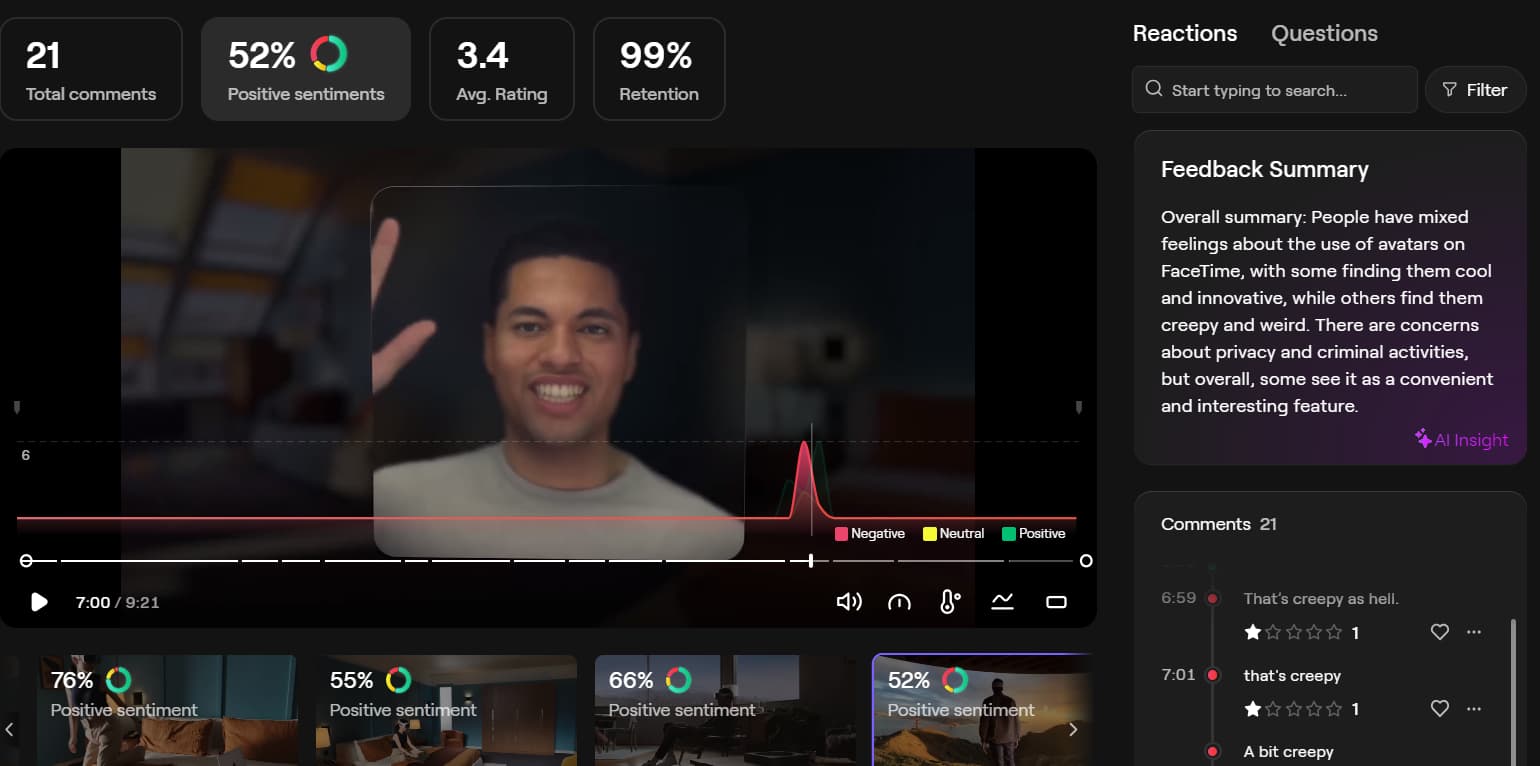
Did any elements of the launch video raise concerns?
The launch video was most successful when it illustrated usage of the device – making the applications come to life in well-produced mock-ups of what the experience of watching a movie, meditating, or working would be like in Vision Pro. The elements of the launch video that were viewed more negatively were those that focused on the tech itself. The 3D face-rendering (52% positive comments) was considered “creepy;” The physical design of the headset (66%) raised concerns about comfort, battery-life and portability; and the discussion of the 4K+ screens in front of each eye (68%) raised questions about headaches and general discomfort.

What makes the entertainment experience in Vision Pro seem so compelling?
The most common use case that viewers were excited about was watching movies and television (68 mentions). Data from Conversations suggested that it is more than just the ability to watch content that makes this application interesting; it is the depth of immersion that the Vision Pro facilitates. As illustrated in the example conversation provided here, viewers think “it creates an artificial world for you.” An iPhone or iPad may give you access to traditional content on versatile devices (good), but the Vision Pro actually enhances the content itself via the level of immersion that it provides (great!). This is a key differentiator between this new headset and previous Apple products.
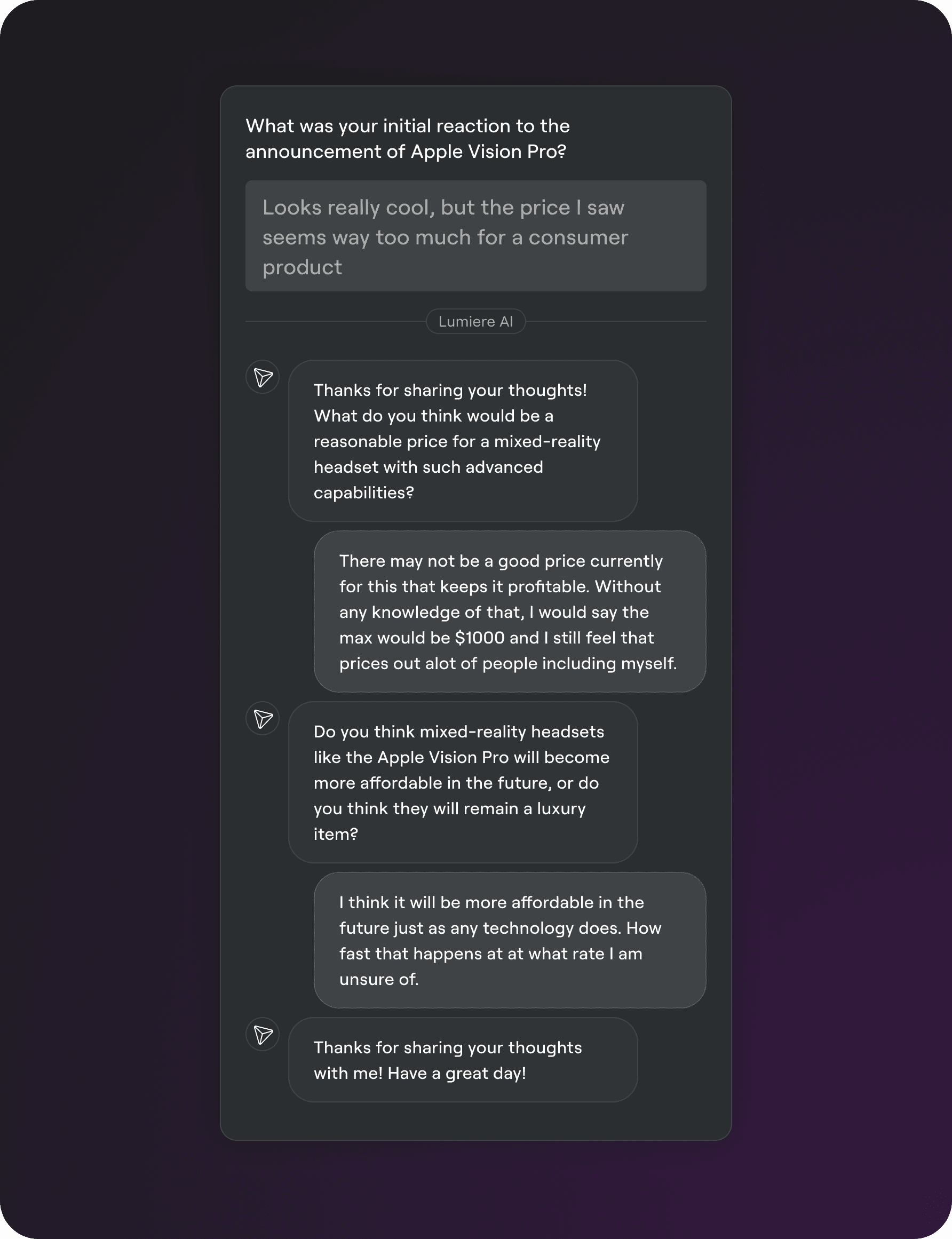
Of course, Apple is not trying to compete with other VR/AR systems on price. The first iteration of Vision Pro is a high-end, limited-supply product for wealthy early adopting individuals and businesses. However, the launch video itself is for the mass-market. Millions of people tuned in to see the latest new gadget from Apple, and even if the product isn’t “for” most of those people, it is still important for the company to understand their level of excitement and perceptions of value. If history is any indication, we’ll get a new Vision Pro every couple years or so, and the technology will get closer and closer to mass-market every time.